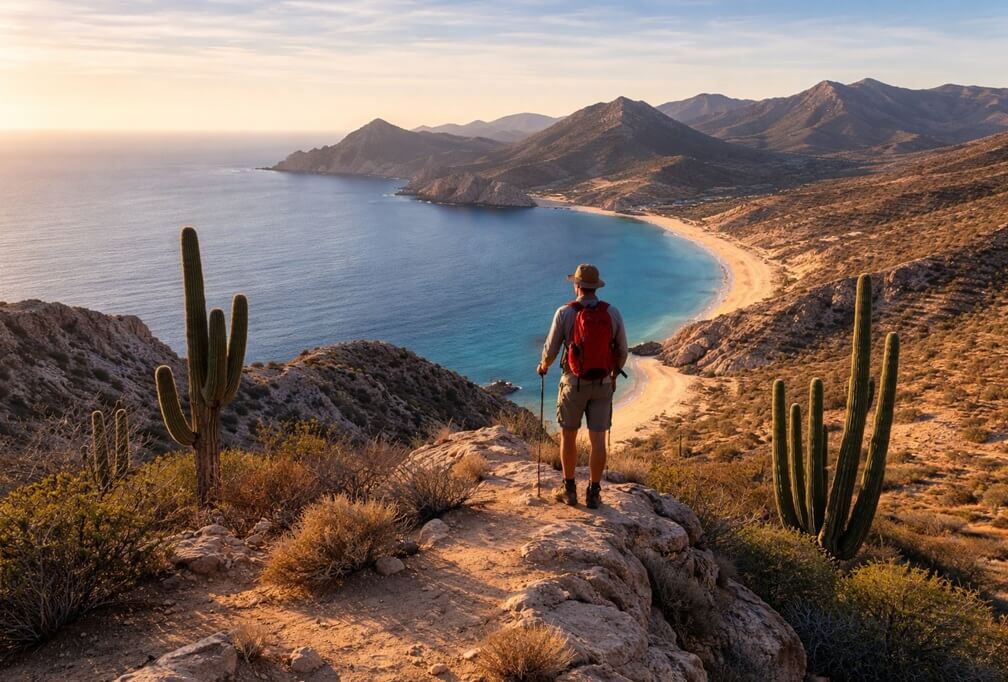
Los Cabos is not only resorts and marinas. Desert ridges, coastal bluffs, and arroyo washes offer big views with no ticket booth—the real costs are sun, dehydration, and getting to the trailhead without overpaying for one-off rides.
Guided eco-hikes exist; this guide assumes you want maximum trail for minimum spend. For paid outdoor packages (ATVs, camels, zips), start at the Los Cabos excursions hub and compare half-day rates there.
Why heat beats “difficulty” here
Mileage numbers lie in Baja. Exposure—no shade, reflective rock, dry wind—can flatten a “easy” 3 km loop. Start at sunrise in warm months, or accept a shorter route.
Carry more water than urban habits suggest—two liters per adult is a baseline for anything over an hour mid-season. Electrolytes matter if you’re not used to desert dry air.
Footwear and traction
Closed-toe shoes with grip are non-negotiable on rocky climbs. Flip-flops belong at the pool, not on loose volcanic gravel.
Trekking poles help knees on descents; lightweight pairs fit in checked bags.
Navigation and communication
Some trails are obvious; others fork. Download offline maps where allowed, take a photo of the trailhead sign, and tell someone your plan. Cell service drops on ridges—don’t rely on streaming maps mid-hike.
Budget levers
- Cluster a hike with groceries or another stop so ride-share or rental fuel covers more than one purpose.
- Free sunrise beats paid sunset viewpoints if your camera skills are decent—golden light works both ways.
Wildlife and etiquette
Snakes and cactus are part of the ecosystem—step carefully, don’t reach into holes, and pack out trash. Wind blows loose plastic into arroyos that feed the sea.
Leave-no-trace reminder
Desert soil crust is fragile; stay on established paths where they exist.
More Los Cabos guides
Compare current airfares on a flight comparison platform once your hiking days are penciled—shoulder-season weeks around major U.S. holidays often move hundreds of dollars on routes into SJD.